Thank you for your interest in my titles! I appreciate you stopping by to take a look. I have a variety of novels with a whimsical and scientific twist along with a dash of romance.
Most of my novels can be found at this site, which supports local bookstores. But shop around. There are plenty of places to find them.
What do I have to offer?
My latest–Snakes in the Class.
At Manster College, monster professors guide students in the fine art of fitting into human society—easier said than done.
Professor Gormley Grimn didn’t choose the Gorgon life—the Gorgon life chose her…sort of. When she was cursed by the jealous fiancée of her study partner, Gormley fled, leaving those she loved behind to become a professor of chemistry at Manster College.
It’s a safely secluded life, devoid of sex—until she falls into a lusty affair with Dean Ormr Snaakemon, a half smooth-skinned man, half smooth-scaled snake, and one hundred percent hottie. Life as a cursed Gorgon finally doesn’t seem so bad. But Gormley’s a lover, not a killer.
When the local Purity League vows to stamp out all monsters, she’s pushed to a decision. Should she and her students stick with her no-killing principles, or join forces with the anti-Purity League Knobbers—a group of demigods, including the woman who cursed her?
When all you need is love and a college education, does anything make fighting worth it?
Snakes in the Class is a monster romance novel featuring steamy snakes and a touching HEA. It is the first book in the Monster College Chronicles series.
Saturday, I felt really draggy. The temperature hovered a little below 40 degrees and the skies were grey. I needed to do some housecleaning but current events plus not wanting to bow to my role in the patriarchy kept me unmotivated. Then it dawned on me, I needed to freshen my house air.
This idea is nothing new: open windows and sometimes doors (if your dog won’t run out) every day to release build up smells, pollution, and carbon dioxide from breathing and cooking. The concept of “house burping” is allegedly common in Germany.
I have a two-story house with an attic and a basement. Getting up to the attic involves scaling some steep Dutch stairs so I decided to leave those windows out of the equation.
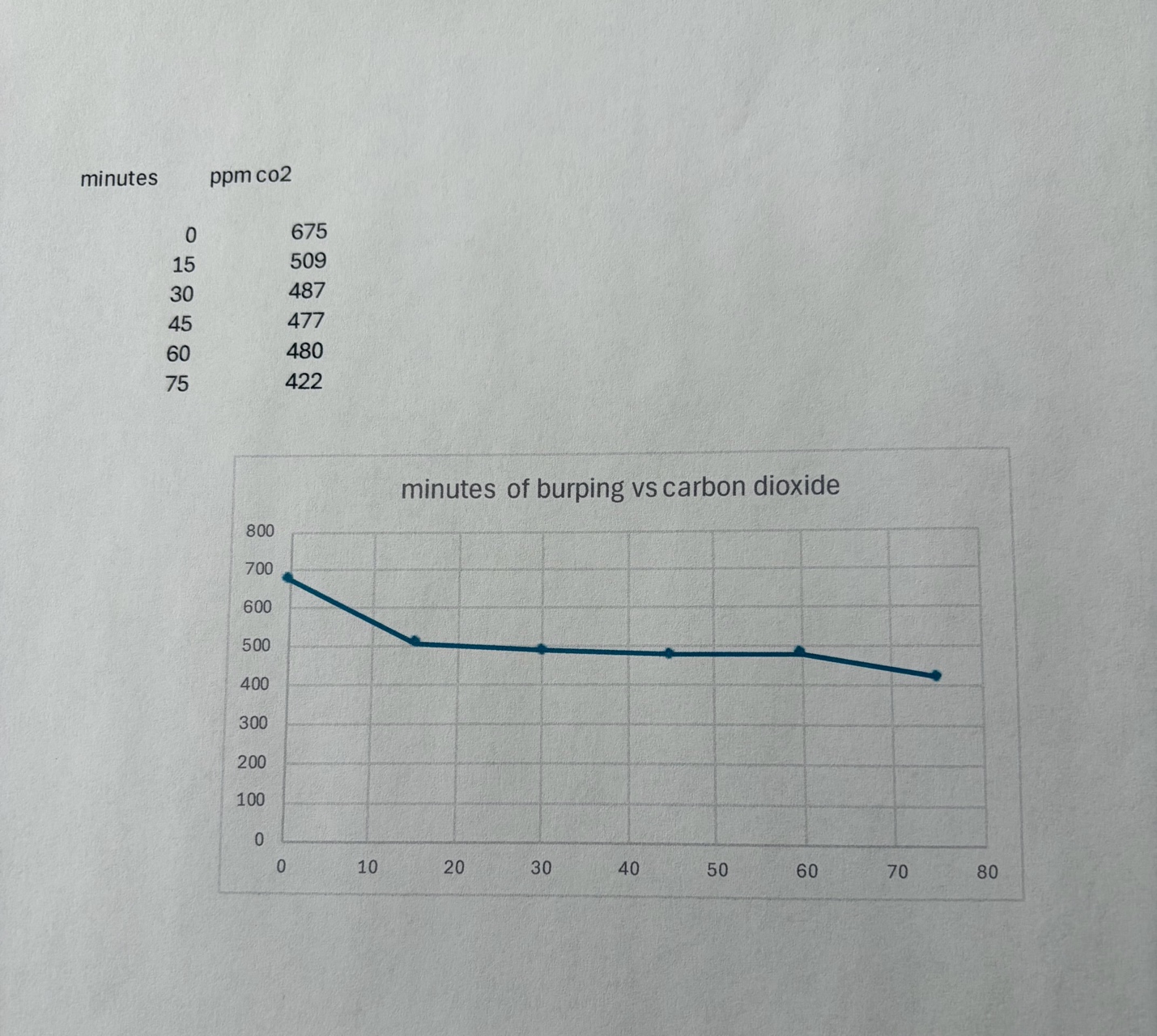
I got out my carbon dioxide meter and took some measurements in an upstairs bedroom. Indeed, the carbon dioxide levels were elevated. No wonder I was groggy. I opened two windows in the bedroom, two in other bedrooms, bathroom windows, a downstairs transom , a kitchen window, and a basement window. The carbon dioxide levels plunged immediately, leveling out after a half hour and bottoming to near outside levels after 75 minutes.
The temperature in the house dropped two degrees. Revived, I spent the time cleaning the upstairs bathroom, floors, and windowsills as I periodically checked the meter. I also put away laundry. Instead of resenting the patriarchy, I was rewarded with a sense of accomplishment—I’d picked up the house and collected data. I concluded that airing the house out for a longer period was the most helpful. Fifteen minutes gave good results, but a half hour and more cleared the air even more effectively.
Here is my data in graphic form:
Of course, to make this a valid study, it had to be repeated. Here’s the repeat in graphic form. Results will vary depending on atmospheric conditions, but the pattern is similar.
The first fifteen minutes give the steepest drop but if you can hold out for an hour or more, you’ll get the best results. Once you hit near 400 ppm, you get diminishing returns.
How fast will the carbon dioxide return? It depends on how many breathers and fires are in the house. In my windowless poorly ventilated classroom, it takes about a half hour for 20 students to spike the carbon dioxide above 800 ppm, which is considered poor air quality. In my house, the levels remained lower even into the next day.
House burping in the winter should be more effective than in the summer. Gases move from a hot area to a colder one. Taking air out of the house into the icy surroundings is thermodynamically favorable. When the outside air isn’t colder than the inside, house burping will be less efficient. Without a fan, the carbon dioxide and other pollutants in your house will trickle out by diffusion from a high concentration to a lower. Another thing to consider, 50 years ago, the outside carbon dioxide levels were only 330 ppm. More carbon dioxide in the air means less will leave your house, although other indoor pollutants will move out. I’ve written about carbon dioxide and its effects on people and plants here.
After I burped my house, the sun came out. Birds sang. Robins hopped in the grass. A friend came over and we split a beer. I walked the dog. The drowsy feeling was long gone, even after the beer. The next day was even brighter and more filled with birdsong.
“I am deeply disturbed about the state of our society. But it is not so much about an impending public health disaster. It is about the crisis of truth in in my country…” Dr. Fauci.
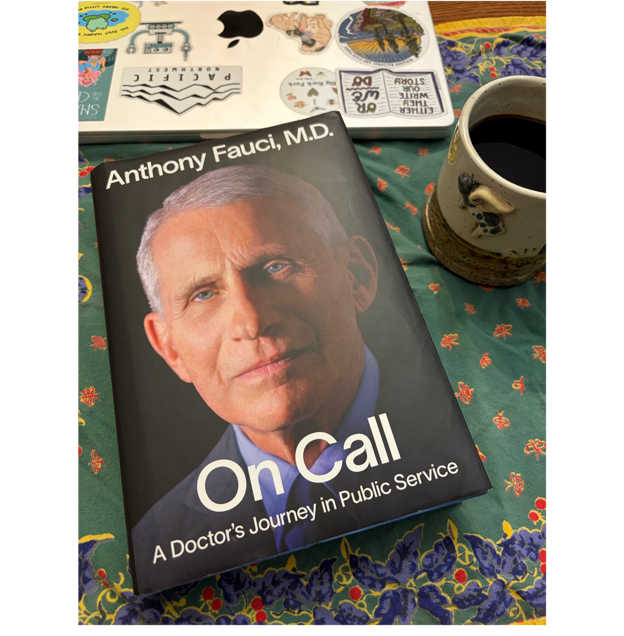
Recently, a friend loaned me Doctor Fauci’s book, On Call. I was surprised to learn that Doctor Fauci, who was belittled by members of the Trump administration and conservatives in general, was not a flaming liberal. He was a somewhat simple kid from the Bronx who didn’t want people to get sick. He appreciated baseball and had been athletic as a youth. He was proud to be Italian. He was undeniably heterosexual but decidedly not homophobic. He was, in fact, somewhat conservative. He worked very well with Reagan and George Bush the 2nd, Obama, Iowa Senator Tom Harkin, and had a fondness for Hilary Clinton. His autobiography reads like a who’s who of diseases and possible pandemics, some realized, some avoided.
Two things surprised me about his book.
One thing that really surprised me in this book was Project Bioshield. I really hadn’t heard of it. I knew about the incentives for development of AIDS fighting drugs, but Project Bioshield came about after 911. One aspectsof Project Bioshield which remains true to this day are the ability to rush vaccine development. Another is to have the Health and Human Services and Homeland Security be in charge of developing and implementing programs to protect us from bioweapons. Considering who we have in charge right now, it’s a little bit scary.
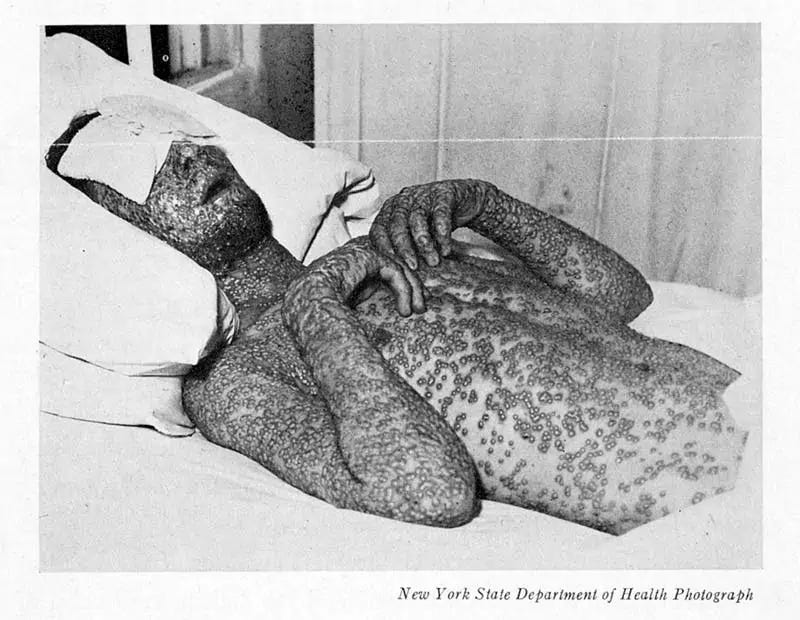
You may recall that it was George Bush who pushed the Department of Homeland Security on us. During the early Y2K era, he was concerned that smallpox, anthrax or even Botulism would be used as bioweapons. One huge focus of the early Bush administration was smallpox. How we would get people vaccinated for this deadly disease should it be become a bioweapon?
As a preparation, some people for in the military were vaccinated against smallpox.
George Bush was wrong about bioweapons, a smallpox attack, and nuclear weapons. They were not being developed. He never faced a reckoning for his errors. He did, however, take Dr. Fauci’s advice about how to prepare for and stop a pandemic.
Dr. Fauci got along well with presidents, all except one. He tried to respect Trump but found him flippant, demanding, and unable to understand that he couldn’t order COVID to be gone by Easter 2020. Trump grabbed at unproven elixirs such as hydroxychloroquine and later Ivermectin. He and his friends even promoted and sold them.
When COVID became a pandemic, Trump agreed to a 15-day quarantine period, then 30. When some states stretched it out, Trump went hostile, said they were violating freedom, and called for the states’ liberation. My son was in an ER residency in Detroit during COVID and I can’t emphasize enough how grateful I was for Gretchen Whitmer’s leadership in Michigan, which included restrictions on public gatherings, which resulted in a kidnapping plot against her.
Trump was angry that a vaccine wasn’t developed and approved before the election. Now, the FDA is in chaos. This is hurting innovation. We see a hatred of vaccines in general. Connect the dots if you can. Trump called Dr. Fauci a Democrat. Death threats followed. There’s quite a lot more in On Call.
My second surprise was the ease in which the Republicans allowed and continued to allow scientific expertise to be sidestepped for revenge. During COVID, the US had more deaths per capita than many countries, yet the factors leading to those deaths have not been corrected. They are getting worse.
Revenge and frustration should not be the basis for public policy. As scientists like to say, nature doesn’t care about what you believe. COVID is a coronavirus, known for mutating and becoming less deadly with time. This has happened. Smallpox has been with us and deadly since at least the Viking Era. Hopefully, will not have a pox on us for being so short sighted about pandemic response should another one arise.
Thank you, Tina, for loaning me this fascinating book.
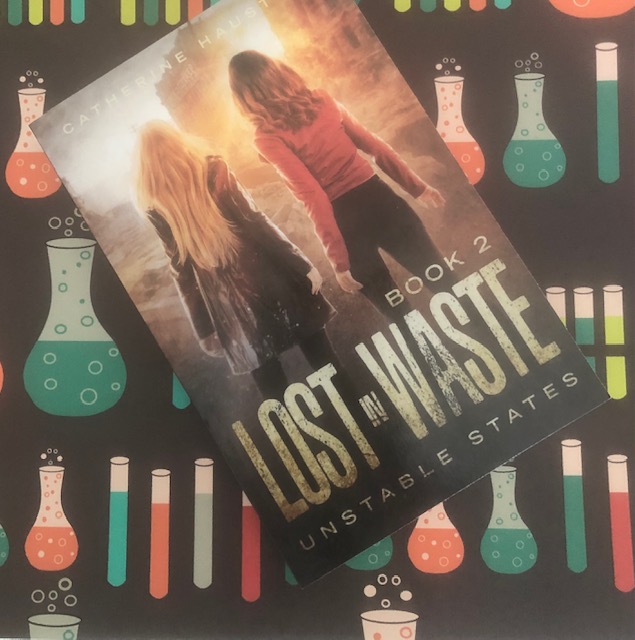
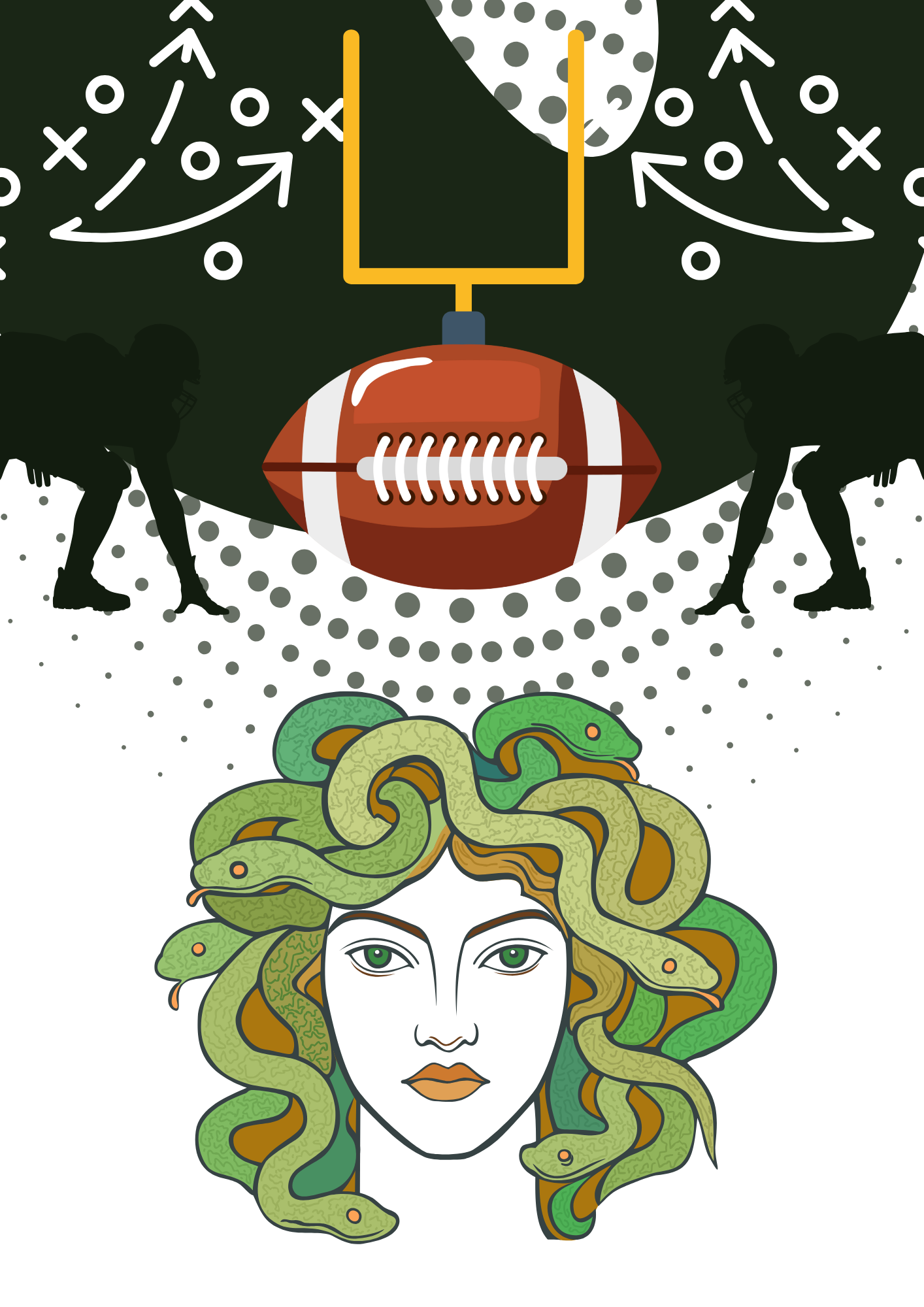
This week, I signed a contract for the second book in the Monster College Chronicles series, Monsters Play the Field. It incorporates friendly reader feedback from Book 1, Snakes in the Class. Readers wanted a monster homecoming and football game, swamp creatures, and trouble at the nearby fertilizer plant. I’m going to give it to them.
How did I come up with this series? When an editor at City Owl Press made a request for a monster romance set on a college campus — Monster High but at a college –I took up the challenge. Colleges and monsters and romances are all in my realm. Not only have I been a professor for decades, my grandparents were a college football coach and a college librarian. Some of my first memories are on a campus, although they are of buildings and vending machines, not lofty ideals.
My novels don’t feature student romance—it seemed too voyeuristic given my role as a professor. I decided that faculty-staff romance was more appropriate, although—disclaimer—I’ve never had such a romance. I decided that, at least in my first book, I would stick with heterosexual monster-monster romance. It features two lonely faculty/staff monsters kindling a relationship within the satirical backdrop of unfriendly humans, punishing demigods, and budget cutting administrators. You can think of this series as the monster version of Abbott Elementary at a college level.
Monster romances feature a love interest who isn’t fully human. There are different criteria for monster romance readers and reviewers. Some only want a human plus a monster, some only want monsters that don’t look human (a lizardman or minotaur for example). What’s the appeal of this genre? Monsters are a type of “other” which allows readers to explore their feelings for an unfamiliar love interest.
The idea of an “Other” is common in gothic romance, science fiction, and fantasy. The “Other” is an unfamiliar or-nondominant social group such as an alien or robot or different type of creature such as an elf or a vampire. The “Other” concept allows readers and authors to explore in-groups, outgroups, colonization, racism, differences, and diversity without directly appropriating any people the author might not understand emotionally. What better way to do this than to explore it through a romance? Perhaps monster romance can undo a little of the harm done by politicians who use “the Other” to motivate people to vote for authoritarians, who are prone to finding an “other” to demonize. It’s been said before: love is the most powerful force in the Universe. And I’d like to add, education might be the second most powerful force.
I heard an interesting lecture at Central College on MLK Day. Jaime Schultz, professor of kinesiology at Penn State, talked about the perils and triumphs of black football players in Iowa during the time of segregation. Since I’m from a family of football and rugby players and fans, this story caught my attention.
Although school segregation ended in 1954, it wasn’t until the Civil Rights Act of 1964 that segregation became illegal. The black players I’m going to highlight were at Iowa colleges between 1918-1951. During this era, players wore soft leather helmets or sometimes wore no helmet at all. Pads were made from quilted materials. (Here is a source.) Football has always been rough, but we’ve made strides in safety.
To even be allowed to play at a white school, black players had to be the best so it’s no surprise that you may have heard some of these names.
Slater Hall at the U of Iowa was named for Iowa’s first black All American. Ironically, he wouldn’t have been allowed to live on campus at the time due to segregation. He and his brother had to live in an apartment near campus. Fred Slater, from Clinton, Iowa, went on to play in the NFL and later graduated from the U of Iowa law school. He became an attorney and a judge in Chicago. He played for Iowa 1918-1921, leading Iowa to a Big Ten Championship and earning All-American Honors.
Jack Trice was a star player who was trampled to death during a football game between Iowa State and Minnesota in 1923. Did racism contribute to his death or was it a lack of safety rules and equipment? No one would say. Iowa State students and a journalist, Donard Kaul, kept his name and memory alive until Iowa State named their stadium after him. It wasn’t an easy task and took until 1997 to become reality. Click the link for more.
Ozzie Simmons was an Iowa running back, 1934-36. He was black so his own team wouldn’t block for him. (My son and some grandsons were/are running backs and this horrifies me.) He was often punched by opposing players during games. Despite lack of support from his team, Ozzie lead After Ozzie took a beating in a poorly refereed game against Minnesota, Iowa Governor Clyde Herring wouldn’t let them forget it. He brought it up before the next game and urged Iowa fans to take matters into their own hands: “if the officials stand for any rough tactics like Minnesota used last year, I’m sure the crowd won’t.” The two governors traded barbes until the Minnesota governor promised a clean game and decided to wager a hog on the game. Iowa lost and the hog, Floyd, from Rosedale, Iowa, was given to Minnesota. Sadly, Floyd died of hog cholera and was replaced by a statue. Ozzie wasn’t allowed to play in the NFL because it of racial prejudice. Ozzie Simmons went on to become a PE teacher in Illinois and by all accounts lived a long and happy life..
In 1951, Johnny Bright, a star player at Drake, was assaulted on the field. Fortunately, the media was there to capture it all. Bright’s jaw was broken by an Oklahoma player even though he wasn’t carrying the ball. Bright he refused to play football in the Unites States after this, moving to and playing in Canada. The man who hit him still denies it was racially motivated and says it was legal but the facts don’t back him up. He even cursed about the media. Bright became a Canadian citizen, a teacher, a principal and a coach. Drake stood by their player and withdrew from the conference over the incident. The university later retired Bright’s jersey and named the football field after him. This incident also prompted the addition of faceguards on football helmets. Bright said he was glad his injury made the NCAA more concerned about player safety, but he personally never felt that the United States was a safe place after this. Twenty-two years after Bright’s death, Oklahoma State apologized to Drake for the incident.
I didn’t know much of this history. My dad and his father were football players during the time period of the players mentioned and were keenly aware of and spoke out against racial injustice. As the speaker, Jaime Schultz, said, the first step towards equality is awareness of inequality. Not to mention, it’s good for all of us to know that not everyone in this world plays fair. As Johnny Bright pointed out, being alerted to the toxic prejudices helped everyone in football. Do we really want to erode Civil Rights?
Nitrates are water soluble and that’s where they pose damage to populations. They are not hard for a chemist or even an amateur to detect but getting to the polluted waterways isn’t easy. Iowa has a sensor network but since ignorance is bliss for some of our elected officials, it is not going to be funded beginning this July. Also, local elected officials have claimed that geese are the source of the pollution (probably at least true in part) and that the majority of the local lake water is not polluted—only the shoreline where people take water samples (and go swimming). A few drones can at least overcome some of our misconceptions and shoreline sampling issues.
6. Smiling Medusa artifact has been found in Amastris, Turkey. I’m a Medusa fan. A gorgon professor is part of my Monster College Chronicles series. Book 2, Monsters Play the Field, has been accepted for publication. All you monster romance and dark academia fans–I’ll keep you posted!
7. A long-lost coffee bean has been rediscovered in Sierra Leone. Coffea stenophylla produces coffee that’s “sweet with notes of chocolate and caramel and a hint of jasmine.” In addition to containing our favorite drug—caffeine—it also holds another stimulant, theacrine. It can grow at warmer temperatures, too. (read about it here and here.)
2. July was one of the worst flooding seasons in global history. At last 134 people were killed in Texas, 34 in China,69 in the Himalayas, and in early August, hundreds were missing in Pakistan and India. The chemistry of why flash flooding is getting worse is outlined here. “Though floods naturally occur, increased moisture and rising temperatures from climate change are in some cases supercharging storms. According to a study in Nature, between 2020 and 2100, the size of the global population exposed to flood hazards is estimated to increase by 15.8%.”
5. The mysterious Shroud of Turin has captivated Christians for a long time. Is it really the burial garment laid over Jesus following his crucifixion? Radiocarbon dating has been inconclusive. Now, the art world steps forward to suggest that the image was made from a statue and not a body.
6. Trump is dismantling science in the US . Why do we have a government that no longer serves the people and our futures? Because this is the will of at least one political party.
A well-publicized recall of frozen foods due to bacterial contamination lead a friend to ask a question: why didn’t the freezing kill the bacteria?
My first thought was the somewhat well-known idea (among science types) that freezing doesn’t kill the bacteria, only slows it down. The answer, however, is more complex.
It’s logical to think that putting food into the freezer or buying frozen foods will cut down on the bacteria and thus the food poisoning. However, freezing doesn’t kill the bacteria in foods.Freezing and thawing cycles can reduce the number of bacteria but doesn’t kill them all. Bacteria can respond to freezing by producing a type of antifreeze or by forming a biofilm. The susceptibility of the bacteria to freezing varies across the type of bacteria correlates to the freezing and thawing cycles as well.
In a study of soil bacteria exposed to freezing and thawing conditions, freezing reduced the number of bacteria but did not totally eliminate them. When numerous freezing and thawing events occurred, damage to the bacterial colonies was significant. However, cold-resistant bacteria developed. Quick freezing and thawing reduced bacterial levels less than slow freezing and thawing. This was due to the type of ice formed—slow freezing produces larger ice crystals which are more damaging to bacteria. What does this have to do with a frozen food recall? Consumers don’t like big ice crystals and often additives such as xanthan gum are added to food to prevent them. ( reference here)
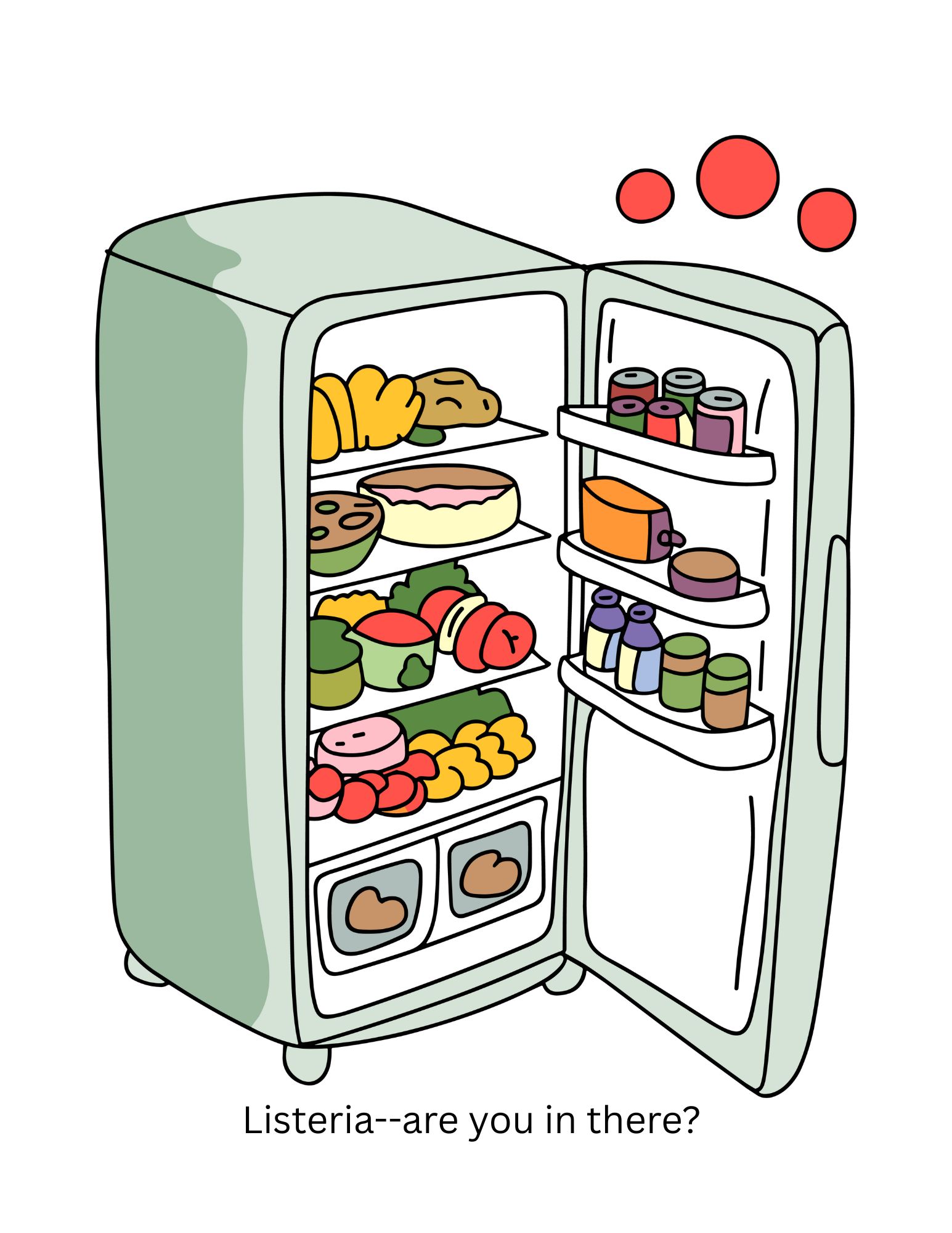
Listeria grows best under warm conditions but even continues to grow under refrigeration. It isn’t killed by freezing and in fact, is one of the most freeze resistant bacteria around. Listeria will cause flu-like symptoms and can even lead to seizures since it primarily attacks the central nervous system. It can be deadly for older people, immunocompromised folks, and infants. The mortality rate is as high as 20% in vulnerable populations. It causes miscarriages and stillbirths, too.
Food poisoning is the most common way to encounter Listeria. Listeria is a persistent bacteria and commonly found in slaughter houses, especially on conveyor belts for carcasses. Listeria forms a biofilm, often working symbiotically with other bacteria to strengthen this pervasive film. (reference)
One way for you to keep ahead of Listeria is to keep your refrigerator clean and to wipe down surfaces and cutting tools after use. Washing produce with warm water before eating it is another recommendation, although produce is not major carrier for Listeria. Use leftovers within three to four days and don’t just let them sit in there until you find time to throw them out. Toss them immediately—they could contaminate other food. Be sure to cook foods thoroughly, even leftovers. (reference)
HPV —human papillomavirus—has been around a long time. Modern humans possibly even gave it to the Neanderthals. HPV is a category of viruses, some of which cause genital and throat cancers. It’s responsible for most cervical, mouth, and throat cancers. It spreads most easily through sexual contact but can theoretically be spread simply by contact with surfaces. Around 80% of sexually active humans will carry a form of HPV at some point in their lives.
Not all forms of HPV cause cancer, although they do cause warts. Some humans, especially younger people, will clear the virus on their own. Many HPV infections cause no symptoms at all. Sometimes cancer is the first and only symptom. Vaccines for HPV have been available since 2006. They prevent infection from the more deadly, cancer promoting forms of HPV.
Scientists recently discovered that Otzi, Europe’s most famous mummy, carried a deadly form of HPV, HPV 16. Otzi, also known as the Iceman, is 5000 years old, and was discovered frozen in the alps in 1991.
I’m interested in Otzi because a DNA test revealed that he and I had the same mitochondrial DNA. Mitochondrial DNA is inherited from the mother in nearly all animals. Thus, at one point, Otzi and I were related. Otzi and I also, allegedly, have the same mitochondrial DNA as Mary Magdalene.
I’m writing a novel series about a college for monsters from the perspective of the faculty and this gives me a reason to reflect on what college is about and what creates stress for faculty.
If you look up what colleges do, you’ll read that they are intended to give broad training in arts, humanities, and sciences with an emphasis on intellectual development. Intellectual development strengthens critical thinking skills and personal growth, or at least we can hope.
Faculty guide students in these pursuits. Despite what outsiders will tell you, respecting student differences of opinion is important to colleges and their faculty in creating an environment where learning can take place. However, students need to learn the material.
You’ve probably heard about outside groups which put professors on watch lists. You can scroll through these watch lists and find out that transgressions might include calling out racism, signing a petition, and recognition of pronouns. There might be one incident, reported on a social media platform, and that will be enough to put the offending professor on a list of the damned.
However, outside groups maybe more covert (as reported by students) and direct their members on how to fill out faculty evaluations. There are also rate my prof sites which are not monitored for accuracy and might even feature evaluations for courses the professor doesn’t teach.
Teachers put up with a lot of BS and not much comes from students.
When you consider that the brain remains in adolescence until the age of 30, it can be reasonable to view these outside groups as predatory. They encourage students to not trust or communicate with their professors and to put faith in their group instead. Some even call themselves ministries. There is one thing they lack: scholarship.
The University of Iowa is my alma mater and like many, I’m not enthused by this center. It seems somewhat haphazard, not particularly scholarly, and possibly too debate focused. Mostly what leads me to these opinions, besides its description and current course offerings, is what those who are involved have to say. Another red flag is that it was dictated by the Legislature, not scholars. It isn’t even an original idea.
At a recent inaugural event paid for by the public, lots of chests were beaten and accusations made. The whole idea of teaching civics isn’t bad, it’s done in intermediate school, high school and even college. The unscholarly part is accusations that the liberals are somehow terrible and need to be replaced. This makes the whole “freedom” idea confusing. At the recent celebratory event, a campus shooting was given as an example of conservative speech being censored but a professor didn’t shoot the man.
Another antecdote hinting at a huge bias problem in higher ed was “the example of former U.S. Treasury Secretary Larry Summers, who stepped down from his Harvard University presidency after suggesting women were less represented in STEM fields because of “intrinsic aptitude.” Summers, who was teaching at Harvard …has stepped away from the university again due to his ties with convicted sex offender Jeffrey Epstein.” (quote is from here.) Personally, sticking up for that particular man doesn’t cast a good light on intellectual freedom.
At the inaugural event (paid for by taxpayers) a speaker from the American Enterprise Institute, a group that advocates for trickle-down economics and limited regulations, was quoted thus,: Katz separated those responsible for higher education’s issues into two categories — “sheep” and “crazies.” The sheep are “almost everybody,” he said, with the crazies at the fringes of both ends of the political and ideological spectrums. Nearly all university faculty fall into the sheep category, and if they follow a bad idea things can, and have, gone very wrong. Crazies used to be a small minority of academic units, Katz said, but now there are more of them and they are “malevolent.”“Don’t hire crazies, don’t be a sheep, and let’s hope that the Center for Intellectual Freedom at the University of Iowa can fix whatever problems there are,” Katz said.
What grade would you get if you gave a speech like that in high school or college?
To quote a student at the event, the speakers didn’t “provide any sort of solid, consistent argument to support the creation of the center.” And “Other(s)… have expressed disappointment in the center’s structure, as its director will have near-total control of hiring professors, inviting guest speakers and other actions…I think that it’s very clear that folks here are not actually interested in freedom of expression,”
As a parent or student paying tuition for scholarship, intellectual development, and training, I’d be damn mad about these speakers and their baseless claims. I’d be mad about outside organizations preying on students and watch-listing professors.
We’re at the anniversary of the deadliest global chemical disaster, harming more than half a million people in Bhopal, India . Most here in the US have forgotten it, although the perpetrator was a US company. On December 4,1984, in the dead of night, a Union Carbide pesticide factory making Sevin, in the Vijay Nagar neighborhood released a cloud of toxic methylisocyanate gas. The cause was absent and out of order safety systems which allowed components for the pesticide to mix and create an out of control, deadly reaction. The decisions to store large amount of toxins on site and to disable the safety systems were done as cost saving measures.
The heavy, odorless gas drifted through homes and across streets, waking people not with the smell but with the strangling effects of a respiratory poison. Within three days, 3,000 people and numerous animals were dead. The horror didn’t end there. Around 20,000 people slowly died from the toxin and the effects persist to this day.
A statue of a mother covering her burned eyes and holding her dead infant commemorates the tragedy but has the lesson been learned? The people are still suffering.
Many years ago, the elected officials of Marion County, Iowa held meeting with the citizens. They were propaganda sessions disguised as town halls. They didn’t ask us about what we wanted but told us what we should be thinking.
One of the elected ones, Senator McKinley, had two things he liked to push. One was something obscure about a valve on gas tanks that demonstrated how ridiculous regulations were. The other was private prisons.
He was all for the prisons and called them a growth industry. Senator McKinley has faded from the news, although his wife posts conservative stuff on Facebook from time to time. Perhaps he is busy counting his money because across the USA, we’re approaching peak private prison. Instead of paying scientists to cure cancer or funding weather prediction and reports, we are paying the private prison industry to lock people up. Yes, imprisoning people is big business and we taxpayers are the ones losing out. Look at it this way: Every time a Republican finds an enemy, a privatizer gets a payout. And you get a DOGE cut to your services and perks of being a citizen.
There were over 60,000 people in 186 ICE detention facilities this year. It’s estimated that 70% of these people committed no crime at all, not even a misdemeanor.
Here is a map of the facilities and ones being built. (Thank you Mother Jones and yes, I did renew my subscription.)
An important thing for us taxpayers to know is who is making bank from these lock-ups?
Core Civic and GEO Group are among the possibly familiar names. As Senator McKinnley alluded to, these companies are not new.
Another profiteer, Core Civic, is reopening closed prisons in Oklahoma and New Jersey, and several other states, banking on more prisoners and more money thanks to the renewed ICE funding.
In early April, hundreds of military and tech companies exhibited their products at the Border Security Expo, which brought “government leaders, law enforcement officials, and industry innovators” together. During the two-day event in Phoenix, Immigration and Customs Enforcement Acting Director Todd Lyons said he would like ICE to operate more like a business: “like [Amazon] Prime, but with human beings.” He added that “the badge and guns” should do “the badge-and-gun stuff, everything else, let’s contract out.”
Let it sink in: Amazon Prime but with human beings. And you are paying the monthly rate.













 Catherine Haustein